
HYDE-SMITH, COLLEAGUES EXAMINE BARRIERS TO U.S. NUCLEAR ENERGY EXPANSION
Miss. Senator Highlights Cost Overruns, Supply Chain Concerns as Grand Gulf Facility Expansion Considered
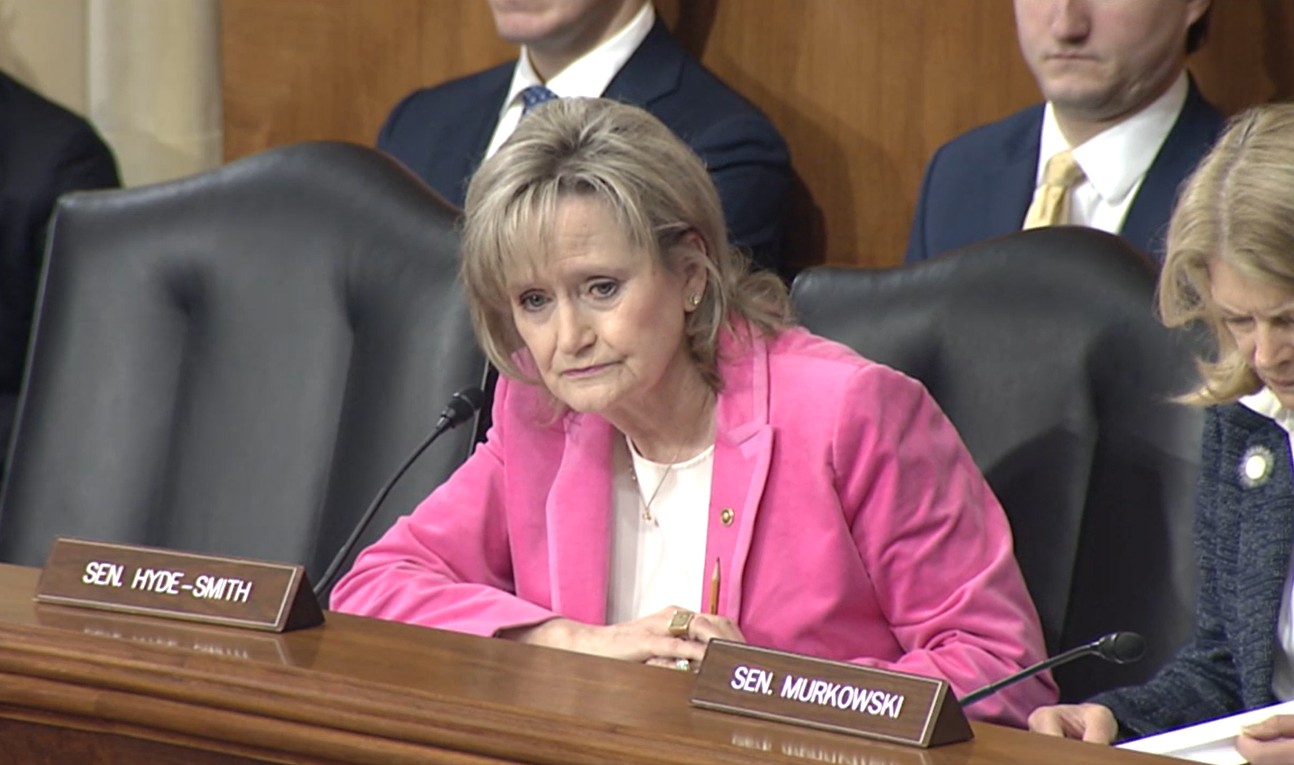
WASHINGTON, D.C. – U.S. Senator Cindy Hyde-Smith (R-Miss.) on Thursday cited the prospect of cost overrun concerns as a significant barrier to expanding U.S. nuclear energy production, including the idea of adding capacity at the Grand Gulf Nuclear Station in Claiborne County.
Hyde-Smith questioned witnesses about reducing cost overruns and construction disruptions at a Senate Energy and Natural Resources Committee hearing called to examine U.S. Department of Energy (DOE) implementation of President Trump’s May 2025 nuclear energy executive orders.
“The Nuclear Regulatory Commission is currently undertaking the process to renew an existing early site permit at Grand Gulf, which could make Grand Gulf an ideal location for a future advanced reactor,” Hyde-Smith said.
“I continue to hear concerns about cost overrun risks being a factor outside the project’s control. These issues range from nuclear regulatory changes to workforce and to supply chain constraints, to many things. In the decades since the United States became a leader in commercial nuclear energy, we have seen a reduction in nuclear manufacturing capabilities and secure nuclear supply chains,” Hyde-Smith added. “What are your thoughts on how we can work to re-shore the nuclear supply chain in a way that would decrease the cost overruns and construction disruption issues that might deter utilities and developers from building new reactors in the United States?”
Idaho National Laboratory Director Dr. John C. Wagner testified that initial costs for building new advanced reactors will be more costly than those that follow, while acknowledging that related U.S. manufacturing capacity declined in recent decades.
“As you rightly framed in the question, we have atrophied in our supply chain and our ability to build these things and our workforce – just about every aspect that we need, particularly for building large nuclear reactors,” Wagner said. “We saw that play out in the Vogle experience, where the cost escalated from an initial estimate around $14 billion to over $30 billion. Each utility board doesn’t want to have that situation play out in their system.”
Theodore J. Garrish, Assistant Secretary for Nuclear Energy, called cost overruns one “stumbling block” toward meeting President Trump’s challenge to build new innovative reactors with speed and efficiency, even as DOE actively engages the private sector and other federal agencies with nuclear energy expertise to deploy the next generation of nuclear reactors.
“The overrun question is one of the issues, that’s one of the stumbling blocks, going forward that we need to deal with. One of the issues that I think that we have to do is we have to incentivize on-budget, on-time activities from the industry that’s building these reactors. Currently there is very little incentive to reduce costs,” Garrish testified. “We are working diligently right now with the industry to see what methods can be undertaken. There are pieces of legislation that are out now currently before the Congress on the question on overruns.”
The witnesses also discussed the value in leveraging DOE nuclear energy programs and technology to build new nuclear reactor capacity in the United States.
While the United States continues to have the largest commercial nuclear power industry with 94 operating reactors that account for roughly 20 percent of total U.S. electricity output, the nation has lost its supply chain and manufacturing capacity since stopping the construction of new reactors years ago. Today, Russia and China control a large portion of global nuclear supply chains and manufacturing capacity as they escalate reactor construction and export programs.
###